Showing posts with label Philippine Peso Exchange Rate. Show all posts

Monday, January 16, 2012

Remittances reach $1.78B in Nov. ’11

MANILA, Philippines—Remittances from overseas-based Filipinos coursed through banks reached $1.78 billion in November 2011, up 10.6 percent from $1.61 billion in the same month in 2010, the Bangko Sentral ng Pilipinas has reported.

This brought the total remittances for the first 11 months of 2011 to $18.32 billion, up 7.3 percent from $17.07 billion in the same period last year.

The data as of November was on track of the full-year remittance growth target of 7 percent set by the BSP.

Remittances are a closely watched indicator as these  help fuel household consumption, which is a key growth driver for the economy.

Philippine Peso Exchange Rate

Saturday, January 7, 2012

Betting big on budget hotels

Of the seven children of the late industrialist Ramon del Rosario Sr., it was only his youngest, Jose Mari, who was able to stay with him when he was posted as ambassador to Canada, Germany and Japan.

The nine years spent helping his father dispense his official duties exposed the younger del Rosario to the very best that the glamorous yet highly competitive hotel world can offer, and he knew then that his career lay in the never-boring hospitality industry.
Thus while his elder brother, Ramon Jr.,

followed in their father’s footsteps and pursued a career in the corporate world, Jose Mari continued on to Valais, Switzerland to complete a diploma in hotel and restaurant management from Hotelconsult Schulhotels after graduating with a Commerce degree from De La Salle University.

There was no looking back since, and del Rosario was able to chart an impressive career in the hospitality industry. He started out as a front desk receptionist at the Hotel Lausanne Palace in Switzerland and worked his way up to food and beverage coordinator at The Manila Peninsula Hotel, management trainee at The Imperial Hotel in Japan and was eventually named the first Filipino general manager and chief operating officer of The Manila Hotel.

Yet when the time came for him to switch careers from employee to entrepreneur in 1997, after going through the General Managers Program of Cornell University in New York and getting his Masters of Science in Management from the Arthur D. Little School of Management in Cambridge, Massachusetts, he did not go the five-star route.

Del Rosario, who left The Manila Hotel after it was taken over by the Emilio Yap group to pursue graduate studies, surveyed the hospitality landscape in the Philippines and saw that the five-star hotel industry was limited and not contributing much to the development of the tourism sector in the Philippines.
The sector that he found more compelling was the affordable, no-frills segment of the hospitality industry that has for long been ignored and consequently underserved.

According to the father of four, a good number of today’s travelers are not actually looking for the “bells and whistles” that come with the deluxe hotels, such as the mint on the pillow at sundown, the gliding staircase and the turndown service.

What most people are looking for, del Rosario says, are a comfortable bed, a clean bathroom and safety and security. They do not want to spend too much for their accommodations since they are out of the hotel most of the day anyway. They just need a place to sleep and literally and figuratively recharge their batteries before going off again the next day.

But the middle-market travelers that Del Rosario wants to cater to will not just stay anywhere, he says. They still want a brand that they can trust and want consistency in service offerings.

This is why when the chance to bring in the Microtel brand, Del Rosario pounced on it, armed with his own money, steadfast belief in his cause and the all-important moral and financial support from his elder brother.

“I was able to convince Ramon to put in some money. He made a leap of faith for the sake of his younger brother,” recalls Del Rosario with a smile.

Paramount Property Management Co. was set up in 1997, initially to provide property management services for real estate projects that were sprouting at that time. Paramount, for instance, managed the Phinma office buildings and also the Cebu City Sports Club of the Ayala group. But just the next year, Del Rosario went back to his first love and his Paramount brought in the Microtel franchise to meet the demand for affordable hotel accommodations.

The first Microtel hotel was opened in Hacienda Luisita in Tarlac in 2001 and 10 years later, the chain has expanded into nine. Plans underway to open at least four more in 2012—one each in the expansion property of the Ayala Technohub in Quezon City, Sta. Rosa, Laguna, Naga City in Camarines Sur and the former Clark Airfield in Pampanga.

And buoyed by the success of the Microtel branches in the vacation spots of Boracay, Baguio and Puerto Princesa, Del Rosario says he is also looking to put up the Microtel brand in Panglao in Bohol and two more in Palawan.

“We are looking to expand in major crossroads and business centers as well as in tourist destinations,” says the 54-year-old Del Rosario.

Del Rosario is bullish on the growth prospects of Microtel because he expects that domestic and regional tourists will continue to rule the field, and they will most likely go for the budget hotels and not five-star accommodations.

“In 2011, 70 percent of the guests are intracountry travelers and we see that continuing up to next year,” he says, “travelers from East Asia and North Asia are coming in strongly and they are not really looking for five-star but rather value accommodations.”

In contrast, he does not see the long haul jet set market coming soon to the Philippines because of the economic difficulties in the developed countries that have drastically reduced travel budgets of their citizens.

Del Rosario says one piece of evidence that Microtel is headed in the right direction is the fervent interest shown by other real estate developers in the budget travel segment.

Megaworld Corp., SM Development Corp. Ayala Land Inc. the Gokongwei group are just some of the ‘big boys’ of real estate development now developing or are set to develop budget hotels all over the country.

To prepare for the onslaught of formidable competition, Del Rosario says that Microtel would bank on its years of experience in the sector, its track record for providing value-for-money services, location in key business centers, the backing of the Phinma group to which Paramount now belongs and growing marketing and distribution reach.

He says that Microtel’s online presence is already reaping dividends for the company, saying that many travelers are now more comfortable about booking their rooms through the Internet. Online promotions will be combined with the usual sales calls as well as presence in important local and foreign trade shows to drive traffic to Microtel.

Del Rosario concludes that Microtel has to remain nimble enough to quickly adapt to a fast-changing marketplace as he envisions competition to grow even more as more travelers around the world realize the tourism gem that is the Philippines.

Philippine Peso Exchange Rate
Tuesday, December 13, 2011

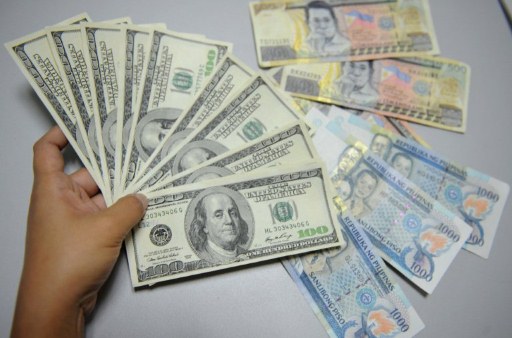
Peso almost flat as traders assets Euro zone debt developments

MANILA, Philippines — The peso moved sideways on the first trading day of the week as investors assessed the developments in the debt-ridden Euro zone.

The local currency closed at 43.61 against the US dollar on Monday, up by three centavos from Friday’s close of 43.64:$1.

Intraday high hit 43.52:$1, while intraday low settled at 43.63:$1. Volume of trade amounted $909.16 million from $1.366 billion previously.

European policymakers met last week to outline a set of additional measures, such as more bailout funds and austerity initiatives, to address the debt crisis in the Euro zone and prevent a worse situation in 2012.

Traders said the meeting of European officials last week was a positive development as far as investors were concerned as it indicated commitment to address the problem. Nonetheless, traders said, investors have remained tentative about whether the debt crisis could actually be solved with the implementation of the measures.

Philippine Peso Exchange Rate

Monday, December 5, 2011

Asian markets mostly higher on euro hopes

HONG KONG – Asian markets mostly rose Monday, lifted by strong US jobs data and Italy’s agreement of new austerity measures, while dealers were also looking ahead to a Franco-German meeting to save the euro.

Investor confidence remained high after last week’s rally that was spurred by the decision of six major central banks to provide cheap dollars to under-pressure lenders in a bid to boost financial markets.

Tokyo was 0.43 percent higher by the break, Hong Kong gained 0.34 percent, Sydney added 0.78 percent and Seoul was flat but Shanghai dipped 0.20 percent.

The region was given a positive cue after the US Labor Department said unemployment dropped to a 32-month low of 8.6 percent in November, surprising most analysts who forecast it would hold at 9.0 percent.

The economy created a net 120,000 jobs, close to forecasts and 20 percent above October.

On Sunday Italy’s cabinet agreed an austerity plan that aims to eliminate its budget deficit by 2013, including 17 billion euros in new taxes, 13 billion euros in public spending cuts, and 10 billion euros in measures aimed at boosting growth.

“News that Italy will accept new growth and austerity measures at least gets us on the right track and may yet be another reason for investors to pull the buy trigger this morning,” said Ben Le Brun, Market Analyst at OptionsXpress.

Markets have slumped in recent months amid fears that Italy — the eurozone’s third biggest economy — would be the latest nation to succumb to the region’s debt crisis, which has already dragged under Greece, Ireland and Portugal.

The leaders of France and Germany are due to meet on Monday to hammer out a plan for further fiscal integration of eurozone economies, which is seen as the only real chance the bloc has of surviving.

In what is seen as a crucial week for the euro, French President Nicolas Sarkozy and German Chancellor Angela Merkel will hold a mini-summit ahead of a meeting of all European Union leaders on Thursday and Friday.

Whatever proposals emerge from the talks must be seen as a credible guarantee that eurozone governments will at last bring their deficits under control and thereby satisfy markets.

European Central Bank chief Mario Draghi has said he could then take action, with many hoping the ECB will intervene to protect European banks from a credit crunch.

However, some analysts remain nervous.

“There is a substantial precedent for expecting disappointment here given that the very nature of the crisis does not lend itself to a quick fix,” said Stewart Hall, Senior Currency Strategist at RBC Capital Markets.

Focus this week “will fall on how a ‘re-founded’ Europe will look in terms of deeper integration and the push for fiscal union,” he told Dow Jones Newswires.

On currency markets the euro fetched $1.3410 and 104.57 yen in Tokyo morning trade, almost flat from $1.3403 and 104.56 yen in New York late Friday. The dollar was changing hands at 77.98 yen, compared with 78.05 yen.

New York’s main contract, light sweet crude for delivery in January, was up 33 cents to $101.29 a barrel.

Brent North Sea crude for January delivery rose 48 cents to $110.42.
Gold was trading at $1,748.50 an ounce at 0200 GMT, from $1,749.20 late Friday.

Philippine Peso Exchange Rate

Friday, November 25, 2011

Calapan Ventures debut shares up in stock market trading

MANILA, Philippines—Shares of Calapan Ventures Inc., owner of the waterworks system of Calapan City in Oriental Mindoro, traded higher during the company’s stock trading debut on Thursday despite the sluggish market environment.

CVI, which listed shares under the ticker H20, saw a 7.2-percent share price increase to finish at P2.68 per share, giving the utility company a market capitalization of P405 million.

“I guess this is mainly because the issue size is very small so it’s very easy for punters to push the issue. Basically, there’s speculation of further uptick due to the limited number of shares in the market,” said Asiasec Equities chief strategist Manny Cruz.

CVI, a subsidiary of publicly listed Jolliville Holdings Corp., sold to the public 42.16 million shares at P2.50 per share, bringing to public hands 26 percent of its outstanding capital stock.

The company listed on the PSE’s second board, which is devoted to companies with high growth potentials, a minimum market capitalization of P250 million and one year in operating history. Unicapital Inc. arranged the offering.

The offer generated P105.4 million in gross proceeds and about P95.15 million in net proceeds, which will be used to finance various water projects.

Specifically, P52 million will be used for the expansion of storage facilities, including the construction of one overhead reservoir as well as the installation of transmission and distribution lines from the reservoir to the water system, based on the company’s final prospectus.

The company also plans to invest in zoning works in 26 barangays (villages) such as the installation of district meters and isolation valves. Also included is the cost of massive meter replacement in order to reduce leakages or non-revenue water (NRW)  to its target level of 20 percent.

NRW – referring to water lost in its distribution system due to leakage, pilferage and metering errors – has been lessened from 64 percent in 1997 to around 33 percent by 2010.

CVI has an ongoing rehabilitation, expansion and improvement plan for its waterworks system in Calapan City, Oriental Mindoro. This plan seeks to bolster water pressure, improve water quality and increase production to accommodate more households into its network.

Philippine Peso Exchange Rate

Thursday, November 24, 2011

Philippine stocks down over reports of weak US economy


MANILA, Philippines—Risk aversion continued to weigh down trading as share prices again fell on Wednesday on weak US economic data, marking the local bourse’s sixth straight day in the red.

The main Philippine Stock Exchange Index (PSEi) lost 18 points, or 0.42 percent, after Wednesday’s trading to close at 4,271.59 points. The broader all-share index sank by 0.24 percent, or 7.14 points, to 3,000.93 as decliners led advancers 80 to 65, while 52 stocks were unchanged.

Stocks tracked losses on Wall Street the night before that sent the Dow Jones Industrial Average down 0.5 percent; the Standard & Poor’s 500 by 0.4; and the Nasdaq composite by 0.1 percent.

“Worries abroad continued to stifle the foreign buying momentum. The weaker than expected US GDP growth also contributed to the uncertainty towards the local market,” a local brokerage firm said.

The index’s losses were led by property giant Megaworld Corp. (3.57 percent), infrastructure firm Metro Pacific Investments (2.24 percent), holding firm JG Summit (1.60 percent), and construction company DMCI (1.33 percent).

The market’s lackluster performance also follows the downgrade of the World Bank’s growth forecast for the country to just 4.5 percent, below the government forecast of as much as 6 percent.

Philippine Peso Exchange Rate

Monday, November 14, 2011

UCPB posts 20% income growth in 9 months

MANILA, Philippines—United Coconut Planters Bank posted a 20-percent growth in its profit in the first nine months to P2.25 billion from a year ago.
This was attributed to increases in lending volume and contributions from subsidiaries.

For the third quarter alone, the bank chalked up P912 million in net profit. With still a full quarter to go, UCPB expects to surpass its P2.4-billion full-year income in 2010, bank executive vice president and chief finance officer Cesar Rubio said in a statement.

Earnings from loans jumped by 20 percent as the bank expanded its portfolio by 18 percent to P51.67 billion at the end of September from a year ago.

Rubio said UCPB had taken advantage of the continued strong demand for end-user financing for mid-range residential homes and passenger cars in Metro Manila and key cities in the provinces to increase consumer loans by 34 percent year on year to P13.99 billion.

The bank’s commercial loans registered a 13-percent growth to P37.71 billion from a year ago as it enlisted new clients.

Deposits, which funded the loan expansion, rose by nearly P10 billion to P146.38 billion from a year ago. More than two-thirds of the incremental deposits generated during the period were low-cost current account and savings account.—Doris C. Dumlao

Philippine Peso Exchange Rate

Thursday, November 10, 2011

Peso up over reports of Italy PM’s offer to quit, Asian good news

MANILA, Philippines—The peso climbed on Wednesday amid favorable economic indicators for some Asian countries and following the Italian Prime Minister’s offer to quit from his post after proposed austerity measures for Italy were passed.

The local currency closed at 43.05 against the US dollar, up by 9.5 centavos from the previous day’s finish of 43.145:$1.

Intraday high hit 42.95:$1, while intraday low settled at 43.06:$1. Volume of trade amounted to $1.06 billion from $800.08 million previously.

The appreciation of the peso on Wednesday, which was consistent with the strengthening of other currencies in the region, came amid reports of improved employment numbers in Korea, expectations of implementation of growth policies in China, and benign inflation in the region that would aid growth.

The rise of key Asian currencies also came after the announcement by Italian Prime Minister Silvio Berlusconi to resign if the austerity measures for debt-ridden Italy were passed. Policies implemented in the past under the Italian prime minister’s watch are blamed for the country’s debt woes.

For this reason, market players said financial markets responded positively on the news about the prime minister’s plan to quit and the push for the passage of the austerity measures.

Austerity measures proposed for Italy are some of the items included in the overall plan to resolve the debt problem of the eurozone, the anemic economic performance of which is affecting performance and growth outlook for the global economy.

Philippine Peso Exchange Rate

Monday, October 24, 2011

Like it or not, new peso bills star in currency award

What matter a mislocated map here or a wrong-colored beak there?

The series of new peso bills, which was vilified after its launch last December for those two design errors, has been judged as one of the best currency series in the world in an international design competition.

The set of new peso notes, called the “New Generation Currency (NGC)” series, was one of two finalists for best new currencies in the world in a worldwide contest organized by the International Association of Currency Affairs (Iaca).

Iaca is an international organization of central banks, currency-issuing authorities, currency producers and suppliers.
The winner of the Best Currency Award was the new series of shilling notes from Uganda. The other finalist for best new currencies was the new series of rupee notes from Sri Lanka.
The contest is aimed at recognizing the best currencies that have been issued within the last 18 months. The currencies were evaluated on the basis of their design, including innovativeness and security features.

‘Best security features’

Besides landing as a finalist, the Philippines’ NGC was also given a special award for best security features. The new series of peso notes was cited for its optically variable device patch, a feature of the new P500 and P1,000 bills.

This feature, which counterfeiters would find hard to imitate, is the reflective foil that bears the image of the Bangko Sentral ng Pilipinas (BSP) logo with a parrot in the P500 bill and the South Sea pearl inside a clam in the P1,000 bill.

The awards given to the Philippine currency were received by BSP Monetary Board Member Armando Suratos and BSP Deputy Governor Juan de Zuñiga at the award ceremony held earlier this month.

Diwa Guinigundo, the deputy governor who headed the committee in charge of the design of the new peso bank notes, said the BSP is proud of the new series of peso notes because of its sophisticated features.

The recognition of the new peso notes as one of the best in the world came after they were roundly criticized when they were launched in December last year.
The critics said the new peso notes had errors in design, and urged the BSP to recall the series.

Some of the errors cited were the allegedly inaccurately designed Philippine map and the wrong color used for the beak of the blue-naped parrot featured in the P500 note.

The BSP said what the critics are pointing out are not errors.

Sophistication of design
The map, which critics said mislocated the Tubbataha Reef by 400 kilometers and did not clearly show Batanes, was simply an artist’s rendition, the central bank said. The map need not be 100-percent accurate because it is an artistic depiction and not meant to be a navigational tool, it said.

As for the color of the parrot’s beak, which is rendered yellow in the P500 note when the actual color is red, the BSP said the inaccuracy was a consequence of printing-capability limitations. The printing of bank notes, unlike ordinary paper materials, have limited colors and the limitation did not allow the beak to be printed red, it said.

Instead of criticizing the peso notes, people should recognize the sophistication of the design, especially as far as security features are concerned, the BSP said.
For instance, the holograms and the embossed prints of monetary value in the peso notes make them difficult, if not impossible, to be imitated by counterfeiters, it said.

Fusion of substance, form

“NGC notes are beautiful. It is an elegant fusion of substance—the theme being what is the best and the brightest in the Philippines—and form rendered in a most artistic and tasteful fashion,” Guinigundo said.

“The jurors must have been impressed by the careful choice and use of cutting-edge security features that actually enhanced the color and thematic dimensions of our currency,” he said.

He said that besides being colorful, the new peso notes are durable (with 20-percent abaca and durability features embedded in the paper manufacture) and clean (it has bioguard properties that resist bacteria and other microorganisms).

So far between 400 and 500 million of the new peso notes are already in circulation.

Guinigundo said that despite this, there seems to be a scarcity of the new bank notes. He said this was because some people, when they get hold of a new bank note, tend to want to keep it rather than spend it.

Philippine Peso Exchange Rate

Sunday, October 16, 2011

Philippines risks investors’ loss of faith–Senator Osmeña

Laws regulating financial transactions are “so loose” that the Philippines risks discredit among investors unless these are addressed, Sen. Sergio Osmeña warned on Sunday.

Osmeña, chair of the Senate banks, financial institutions and currencies committee, also denied the charge of businessman Roberto Ongpin that the legislative committees looking into his allegedly questionable dealings with the Development Bank of the Philippines (DBP) had already prejudged the case.

“There is no prejudgment,” said Osmeña III in a phone interview with the Inquirer, adding that he expected the Senate inquiry into the propriety of Ongpin’s loans and buy-up of DBP’s Philex Mining shares to be “a really long process.” Ongpin’s deals, he added, were “just one (aspect).”

The two hearings conducted so far despite Ongpin’s absence showed “ang daming butas ng batas (there are so many holes in the law),” especially those concerned with insider trading,” Osmeña said.

“The problem is that the law is so loose.  I’ve read them, eh. In the United States, someone who was involved in this kind (of deal) after a three-month trial was recently given an 11-year sentence and fined $10 million,” he noted.

“Here in the Philippines, if we don’t tie up the loose ends, our financial system cannot be credible… We need to tighten the laws to become more credible to investors,” the senator said.

Osmeña did not discuss the specific loopholes in the country’s laws.

Ongpin, a trade minister in the Marcos dictatorship, denied there was anything anomalous in his dealings with DBP, noting that his company’s P660-million loan was fully repaid. He said the DBP also made a good profit when he bought the bank’s Philex shares at P12.75 each. Charges that he had engaged in insider trading when he turned around and sold the Philex shares to businessman Manuel Pangilinan for P21, were criticism based on the “benefit of hindsight,” he said.

A Senate resolution penned by Sen. Panfilo Lacson had directed the Senate banks and blue ribbon committees to investigate the DBP for “alleged anomalous large-scale financial transactions” resulting from “behest loans and similar sweetheart deals…”

Lacson, sought for reaction to Ongpin’s comment about the prejudgement of his case, said: “What some of the senators may have prejudged are the anomalies involved in the loan transactions with DBP” and not Ongpin specifically.

“What’s obvious is the fact that the senators have already formed their individual opinions on the issue,” he added in a text message.

Philippine Peso Exchange Rate

Monday, October 10, 2011

BSP revises peso forecast for 2011 Inflows seen to strengthen currency

MANILA, Philippines?The Bangko Sentral ng Pilipinas has revised its forecast on the average peso-dollar exchange rate for the year. It now expects a stronger range of 42 to 45 against the US dollar, from the previous range of 45 to 47, as foreign capital inflows are expected to remain robust.

BSP Deputy Governor Diwa Guinigundo said that, in making its latest peso-dollar projection for 2011, the regulator took into account the latest financial developments that tend to influence the exchange rate, including dollar inflows.

In 2010, the peso averaged at 45.12 against the dollar. Toward the end of the year, it strengthened, closing at 43.84.

Foreign exchange traders and economists said last year?s appreciation of the peso was partly driven by the surge in foreign portfolio investments.

In 2009, the peso averaged at 47.63 against the greenback.

Foreigners have been buying up local stocks and other securities, pushing up the stock market and pulling down interest rates on government securities to record levels. According to analysts, foreign investors looking for short-term gains prefer to park their funds in emerging markets like the Philippines, given the encouraging growth rates and favorable economic prospects of the region.

According to an earlier report from the central bank, net inflow of foreign portfolio investments rose to $4.6 billion in 2010?nearly 12 times more than the $388 million registered the previous year.

Latest data from the BSP showed that foreign portfolio investments would continue to be strong through 2011. In the first two weeks of January, net inflows amounted to $276.14 million?up 87 percent from the $147.68 million seen in the same period last year.

Guinigundo said that, apart from foreign portfolio investments, other factors that had served to strengthen the peso were remittances, investments in the country?s business process outsourcing sector, and improving export income.
He said the peso-dollar rate of 42 to 45 was used by the BSP in making the inflation forecast for this year and 2012.

The exchange rate influences inflation through imports. A stronger peso makes imported goods cheaper in local currency terms, thereby pulling down overall domestic prices.

The BSP changed its inflation forecasts for this year and the next. For 2011, the BSP expects inflation to reach 4.4 percent, faster than the previous estimate of 3.6 percent. For next year, inflation is seen to settle at 3.5 percent from the previous 3 percent.

For this year and the next, the government hopes to limit the rate of rise in consumer prices to within a range of 3 to 5 percent.

By Michelle Remo
Philippine Daily Inquirer
First Posted 02/11/2011
Philippine Peso Exchange Rate
36UVSYKP6FVW