Showing posts with label arroyo corruption. Show all posts

Monday, November 28, 2011

Gloria Arroyo fit to leave hospital

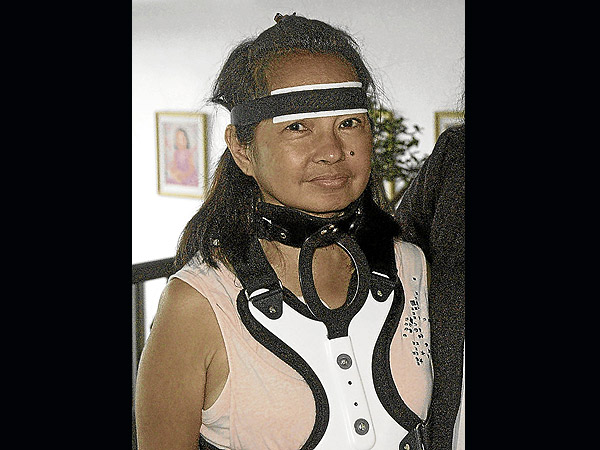
HOUSE OR HOSPITAL? What will it  be for Pampanga Rep. Gloria Macapagal-Arroyo? Continued hospital arrest in a government military hospital or house arrest? AP

After one of former President Gloria Macapagal-Arroyo’s physicians affirmed in open court that she was “medically fit,” prosecutors asked that she be detained at any government facility, “preferably the Southern Police District.”

Arroyo’s lawyers attempted to block her doctors from testifying at Friday’s hearing at Pasay City Regional Trial Court Branch 112 and proposed her house arrest, withdrawing an earlier plea for her continued detention at St. Luke’s Medical Center in Taguig City.

Lead defense counsel Jose Flaminiano admitted that his client, who has a bone ailment, was “fit for discharge” but did not specify which house he preferred her to be detained.

In a phone interview with the Inquirer later in the day, Flaminiano said it was up to Arroyo, now a representative of Pampanga, to say where she should stay. “We will consult her and lay down her options. We will know by Tuesday,” he said.
Arroyo has a house in the exclusive La Vista Subdivision in Quezon City and another in her district in Lubao, Pampanga province, near the Macapagal ancestral home.

According to Interior Secretary Jesse Robredo, the government can better secure Arroyo at the Armed Forces of the Philippines Medical Center (previously known as V. Luna Medical Center) in Quezon City.

Robredo said authorities would treat Arroyo “no different from Erap,” referring to deposed President Joseph Estrada, who was initially detained at Veterans Memorial Medical Center in Quezon City before he was moved to a military camp in Tanay, Rizal province, and later to his rest house nearby during his trial for plunder.

“But this is the call of [Pasay RTC Judge Jesus Mupas],” Robredo said in a text message to the Inquirer.

Questions on health
As far as Justice Secretary Leila de Lima is concerned, the move by Arroyo’s lawyers to have her put under house arrest instead of hospital arrest was “an implied admission that her health is really improving.”

“There is nothing in her medical abstract stating that her condition was worse at the time she asked for an allow-departure order. That’s why I denied it,” De Lima told reporters in an ambush interview.

She also said she had received reports that Arroyo’s doctors were being “harassed” by the latter’s lawyers.

Talking to reporters outside the court after the hearing adjourned at past 10 a.m., Arroyo’s legal spokesperson, Raul Lambino, insisted that because she was no longer president, she did not have to make a full disclosure on her state of health.

The matter had been expected to be disclosed by her attending physicians, who were subpoenaed to court on Thursday.

The summonses were issued after lead election prosecutor Ma. Juana Valeza requested that Arroyo’s medical condition be revealed in court in order to determine the necessity of her detention at St. Luke’s—a request Flaminiano made last week only to be withdrawn at Friday’s hearing.

Flaminiano argued that since the defense had admitted Arroyo’s fitness to leave the hospital, it would be irrelevant to have her doctors disclose in open court her present medical condition.

“It’s not an issue anymore,” he said, adding that making any disclosure on the former President’s health could infringe on her right to privacy, and that a person’s medical condition was covered by the doctor-patient confidentiality rule.

Judge Mupas said the court could not rule on Arroyo’s transfer unless it heard from her doctors. He reminded the members of the defense that they were lawyers like himself and that it would be best to hear of Arroyo’s state of health from her doctors themselves.

GLORIA ARROYO’S DOCTORS. Former President Gloria Macapagal-Arroyo’s doctors— (from left) Roberto Mirasol, Juliet Gopez-Cervantes and Mario Ver—leave the courtroom after the hearing on Friday in Pasay City. Arroyo, who tried to leave the country on medical grounds while the government scrambled to file charges against her, is well enough to leave the hospital where she was arrested last week, according to her doctors. AP

“The court is interested in the present medical condition of the accused,” he said.

Despite the defense’s insistence on not putting the three doctors—main attending physician Juliet Gopez-Cervantes, orthopedic surgeon Mario Ver and endocrinologist Roberto Mirasol—on the stand, Valeza managed to have Ver testify on his patient’s fitness.

After Ver replied in the affirmative to the question of whether Arroyo was “medically fit,” Valeza asked no more questions.

But Mupas asked Ver to qualify his answer and elaborate on the patient’s “conservative management and treatment.”

“As far as my subspecialty is concerned, she is fit to be treated as an outpatient,” Ver said.

He said that Arroyo was being treated for pain in the lower back with painkillers and muscle relaxants, and that she recently complied with the mandatory bed rest and was undergoing physical therapy.

SPD HQ ‘preferable’
Arroyo’s rehabilitation can be continued “for the next several weeks as an outpatient,” Ver said.

Valeza, a lawyer at the Commission on Elections, moved that Arroyo be transferred to any government detention facility in light of her camp’s declaration of her fitness.

She mentioned the Southern Police District headquarters in Taguig as among the “preferable” detention places.

Earlier in the hearing, prior to Ver’s remarks on Arroyo’s condition, Valeza sought the patient’s transfer to a government hospital.

Defense co-counsel Jay Flaminiano acknowledged the prosecutor’s gesture but maintained their stand on their client’s house arrest.

Jose Flaminiano also said Arroyo could waive her appearance at every court hearing. He said this was among the considerations the legal team would look into after picking her place of detention.

“The only time she will appear is during the arraignment because her presence is mandatory,” he said.

In a radio interview, Robredo said Judge Mupas would “determine whether [Arroyo] needs house arrest or not.”

“Wasn’t President Erap in a government hospital, and it turned out to be OK? And [we just have to] make sure and make it clear that she is in the custody of the government,” Robredo said.

“If the court decides that she will be in a government hospital, then [it will be so]. But if the court [specifies] a regular detention facility, then we will prepare a detention center for her,” he said.

Arroyo and her husband attempted to leave the country, ostensibly to seek medical treatment for her abroad, on Nov. 15, after securing a temporary restraining order (TRO) from the Supreme Court on her inclusion in the immigration watch list.

But they were blocked by De Lima, who said the watch-list order on her was still in effect because the Department of Justice (DOJ) had yet to receive a copy of the TRO.

Arroyo was subsequently charged with electoral sabotage along with Andal Ampatuan Sr. and Lintang Bedol, former Maguindanao governor and election supervisor, respectively, on the recommendation of a joint DOJ-Comelec panel that looked into the purported fraud in the 2007 senatorial elections in parts of Mindanao.


Up to the court
President Aquino also said it was up to the court to rule on the defense’s request for Arroyo’s house arrest.

Speaking to reporters after attending the first National Media Conference on Climate Change Adaptation held at Bicol University in Legazpi City, the President said: “They are the ones in power to decide where to incarcerate people that they ordered arrested. We are the executive [branch]; we are tasked to follow the mandates of the court when it comes to questions of the law.”

He also said “prudence” dictated that he not comment on the matter.
“Being the Chief Executive of this land, I might be construed as trying to influence the decision of the court,” he said.

Asked whether he felt vindicated now that Arroyo’s lawyers and doctors had attested to her medical fitness, Mr. Aquino said: “If the doctors did say that, then they became true to their profession. They told the truth, and we thank them.”
In Manila, De Lima likewise said it was up to the Pasay court to rule on whether Arroyo should be put under house arrest.

But she said this would “also be difficult because there’s a perception of special treatment,” which, she pointed out, “the administration is trying to avoid.”

She added that the other options available were Arroyo’s “private arrest” in a government or public hospital, or detention at an “appropriate jail facility.”

De Lima stressed that Arroyo’s health condition was “a matter of public interest.” She said this was one of the reasons cited by the DOJ in asking the Supreme Court to also have the former President’s doctors summoned.

The high court is expected to rule on the DOJ’s request on Tuesday. Chief Justice Renato Corona said that if the tribunal granted the request, the doctors would be asked to appear on Thursday at the resumption of the oral arguments on the suit filed by Arroyo against the government in connection with the ban on her travel. With reports from DJ Yap in Manila and Christine O. Avendaño in Legazpi City
First posted 12:39 am | Saturday, November 26th, 2011

Arroyo Corruption

Wednesday, November 23, 2011

Philippine graft problem bigger than Arroyo

President Benigno Aquino III has hailed the arrest of his predecessor, former President and now Pampanga Representative Gloria Macapagal-Arroyo, as proof his antigraft drive is working but analysts say much more needs to be done to end the country’s corruption plague.
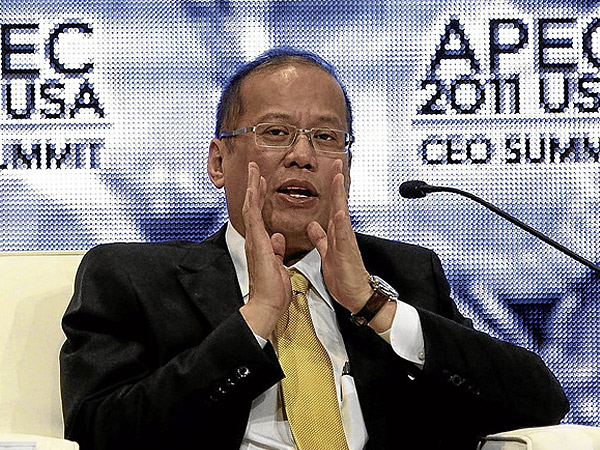
Arroyo, who ruled the Philippines from 2001 to 2010, was charged on Friday with rigging senatorial elections, and Mr. Aquino has vowed to pursue her for a wide range of other corrupt acts she allegedly committed while in power.                     President Benigno Aquino III. AP Photo
“This is the fruit of our reforms to fight corruption. The principle behind these reforms is that the guilty must be made to account,” Mr. Aquino said over the weekend in his first comments on Arroyo since she was arrested.

Mr. Aquino won a landslide election victory last year after campaigning almost exclusively on a platform of ending widespread corruption across all sectors of society, which is one of the main reasons for the country’s crushing poverty.

The bachelor President and son of a democracy heroine is widely regarded as being corruption-free and he has used his clean image as one of the key drivers in trying to change the public’s tolerance for graft.

Mr. Aquino has also vowed to hold even the most powerful people to account, and has made the pursuit of Arroyo one of his administration’s top priorities.
Arroyo stood down last year with opinion polls showing her to be the most unpopular Philippine leader since dictator Ferdinand Marcos of the 1980s, largely because of the belief she was corrupt.

She is alleged to have approved multimillion-dollar government contracts that enriched herself, her family and supporters. Arroyo is also accused of cheating to win the 2004 presidential election. She denies all the charges.

Major reforms
Political analysts say that, while the determination of Mr. Aquino and his aides to hold Arroyo to account signals a good intention to fight graft, they have not yet taken the major reforms needed to dig out the roots of corruption.

“Their idea seems to be to get one big fish, but that won’t be enough,” said political science professor Francisco Magno of De La Salle University.

“It has to go beyond the campaign promises, the rhetoric of change.”
Magno said one of the government’s top priorities should be to strengthen agencies that held officials to account, such as the Office of the Ombudsman.
“The (watchdog) institutions are weak. They need to be strengthened, put more resources, put in more lawyers and pay them better,” he said.

Political scientist Bobby Tuazon, director of the Center for People Empowerment in Governance, criticized Mr. Aquino for backtracking an election campaign to back a freedom of information bill.

“By backtracking … he is sending a mixed signal of whether he is serious in the fight against corruption,” Tuazon said.

On a macro level, Tuazon said the entire political system of patronage, which was entrenched more than 100 years ago during US colonial rule, needed to be addressed if corruption was to be seriously tackled.

Bribery an institution
Under this system, politicians hand out the spoils of office to their supporters in exchange for their loyalty, or seek bribes in return for contracts or favors, Tuazon said.

“Bribery is an institution,” he said.

Tuazon alleged that Arroyo was one of the most flagrant offenders, but that corruption infested all levels of politics.

“Political patronage is usually identified with the president. But if you go down the line, it is also real in Congress, provincial governments, local governments, even down to the village level,” he said.

Unexplained wealth for politicians is a common theme across the Philippines.
Provincial governors earn just P50,000 ($1,150) a month while city mayors make about P45,000, according to Mars Buan, a political scientist who advises firms for risk consultancy Pacific Strategies and Assessments.

But Buan said in many parts of the country, the houses of governors, mayors and other politicians were usually the most luxurious, and would cost much more than their salaries allowed.

“There are hazy ethics, low salaries, the pressure of the system . . . the need to get back all the money they spent in elections,” Buan said in describing Filipino politics.

Originally posted: 11:32 pm | Monday, November 21st, 2011


Arroyo Corruption

Monday, October 10, 2011

Arroyo the most corrupt president

A total of P2.5 billion in behest agricultural loans to friends and associates of the former first couple, Mike and Gloria Arroyo has been made public.

Sen. Frank Drilon, who made the exposé, says it’s impossible to recover the loans since most of the borrowers are not identified, do not want to pay or have been reported as dead.

The Arroyos were allegedly  into all kinds of money-making ventures: From telecommunications (NBN-ZTE); railroad (North and South rails); selling second-hand choppers and passing them off as new; intelligence funds of the Philippine Amusement and Gaming Corp. and Philippine Charity Sweepstakes Office; fertilizer and all kinds of products that government distributed supposedly to help the citizenry; real estate (Alpha Land, a real estate development company, is reportedly Mike’s but under a dummy’s name); taking over closed banks; smuggling.

They didn’t even spare “jueteng,” a poor man’s numbers game, which is illegal.
Gloria Macapagal “Makapal” Arroyo is apparently more corrupt than Ferdinand Marcos since the latter didn’t touch jueteng.

* * *

There have been reports of ammunition made by Armscor, a local gun and ammunition manufacturer, misfiring during shooting practice.

I found out the reports were accurate when most of the Armscor .22 caliber ammunition I used in a target practice recently did not fire.

One piece of ammo was so overloaded with gunpowder that it blew up in my face.

It destroyed the German-made .22 caliber pistol I recently bought at the last gun show.

I was lucky I was wearing protective shooting glasses when I fired the Armscor .22 caliber ammo because my eyes would have been hit by the gunpowder residue.

Isn’t there a government agency that watches over the quality control of products that come out of local gun and ammo factories?

* * *
Armscor is owned by the Tuasons who are related to former first gentleman Mike Arroyo.
It was able to sell many pistols and 9 mm ammo to the Philippine National Police (PNP) without passing the required test on all guns and ammo because of Mike Arroyo.

* * *

I hate to write about Armscor’s defective guns and ammo since one of its owners, the late Butch Tuason, was a hunting buddy many years ago.
Butch, who died of cancer, was a regular guy and very particular about the quality of Armscor ammo that we used for hunting.
It was only after his death, I’ve observed, that the quality of guns and ammo at Armscor deteriorated.
Most of my friends in the practical shooting community don’t advise using Armscor ammunition for target practice or carry them because of their poor quality.
* * *
A few days after I wrote about the lousy service Globe Telecom gives to its customers, I received a promo letter from the company asking that I upgrade my subscription plan.

The nerve!

My subscription plan is platinum, the highest Globe can give, so I expect excellent service from the phone company.

But what do I get for my platinum plan?

My calls almost always get disconnected or cut off in the middle of a conversation.

The “dropped” calls are charged to my monthly bills.

If a platinum holder like me gets lousy service, I can imagine what kind of service subscribers with lesser plans get.
There was a time Globe gave excellent service.

* * *
What’s gone wrong with Globe?

Over-subscription, meaning it has accepted customers more than it can handle.
The result is clogged lines that cut off your calls in the middle of a conversation.
There’s a term for it: Greed.

By


arroyo corruption 

NRNR9JS5KNWR

Friday, September 16, 2011

US envoy cited Gloria Macapagal-Arroyo for fight vs corruption

The United States Embassy in Manila appeared ambivalent about the Arroyo administration’s fight against corruption, on the one hand citing its “seriousness” in fighting the scourge, and on the other enumerating the many ways corruption was prevalent in the country.

In a Nov. 15, 2007, cable to the Department on State in Washington, D.C., that was leaked by web whistle-blower WikiLeaks, the embassy said the Arroyo administration was “beginning to make strides” against corruption.


$329-million deal
The embassy memo, titled “Corruption in the Philippines: Challenges and Progress,” was sent one month after then President Gloria Macapagal-Arroyo had canceled the $329-million NBN-ZTE deal between the Philippines and China that was allegedly attended by massive corruption involving no less than her husband.
The memo, however, did not mention the NBN-ZTE controversy.
Instead, the embassy said “the recent conviction for plunder of former President Joseph Estrada has highlighted the corruption issue” in the country.


Significant steps
“The Office of the Ombudsman’s prosecution of Estrada for plunder and the Sandiganbayan antigraft court’s unprecedented conviction and 40-year sentence on the former president clearly indicate that the Philippine government is taking significant steps to address the problem…

“While Estrada was pardoned, he was required to forfeit bank accounts and property amassed illegally during his two-year tenure, as decreed by the graft court that found him guilty,” the cable noted.

It added, however, that “tackling corruption remains a central challenge to good governance in the Philippines and ensuring broad-based economic growth.”

“Corruption is also a deterrent to foreign investment, particularly in terms of providing a level playing field for investors and especially for US companies that must comply with the Foreign Corrupt Practices Act,” it said.
The “good news is that there is a widening recognition of the problem in the Philippines and an increasing groundswell of support to address the issue.”

“Similarly, there are new efforts underway by the government to address key corruption issues and to strengthen those institutions most critical to anticorruption efforts, including the Office of the Ombudsman, Bureau of Internal Revenue, Bureau of Customs and the judiciary.

Long legacy
It noted that “corruption in the Philippines has had a long legacy. Most notably during the Marcos era, corruption has been an endemic problem that has contributed significantly to the weakening of many national institutions.”

According to the cable, “while Marcos’ brand of blatant corruption may be a thing of the past, corruption remains a pervasive challenge at all levels of government… The Philippines ranks 131st out of 180 nations in the perception of corruption by business and country analysts.”

According to the embassy, Washington was doing its part in helping fight corruption in the Philippines.

arroyo corruption